Well, the March meeting didn’t completely run to plan. Sam from Age UK ran an impromptu 10 question quiz until our speaker, Nicolas Watts arrived. Nicholas Watts runs Vine House farm at The Deeping which is situated in the Fens on ‘black’ land. The area round here is first grade silt land.
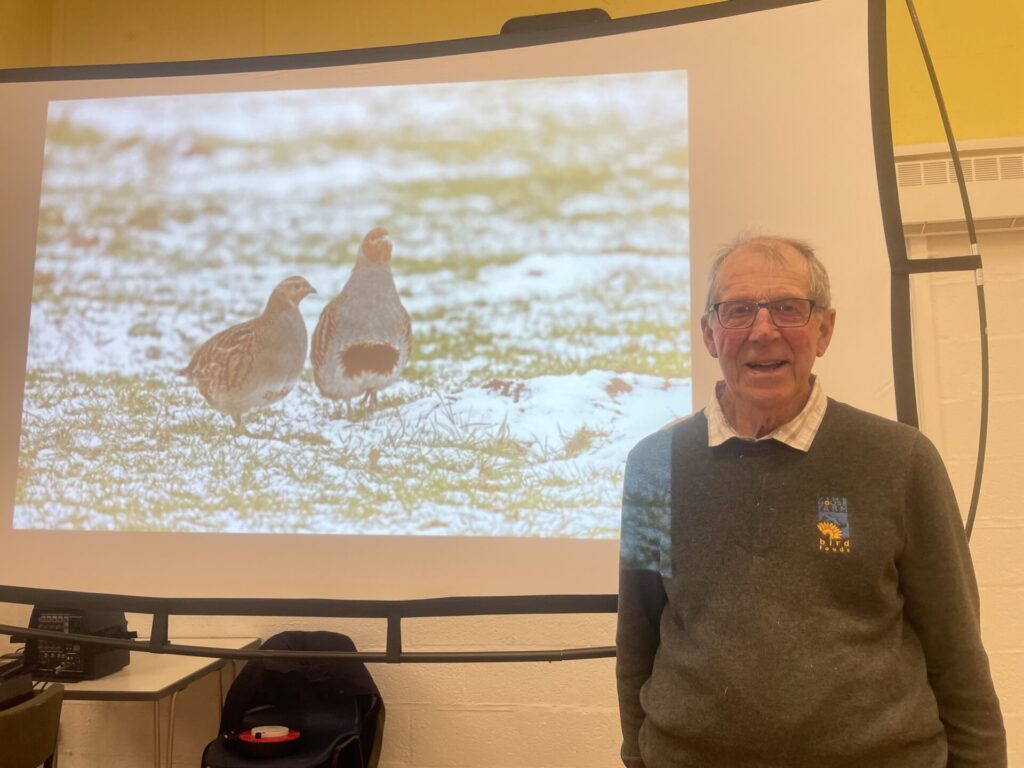
He is passionate about wildlife and the decline in insects and birds in our area. Birds need insects to feed themselves and their chicks, but fewer weeds and fewer wildflowers means fewer insects. Cattle farming was more widespread than now so fewer flies and so fewer swallows which fed on those flies. Bees need a succession of wildflowers through the season and ivy at the end of the year is valuable for shelter, and the flowers and the berries for food.
We were shown how six meter strips around the fields at Vine House are left uncultivated resulting in fifty different types of weed so more flowers, more insects and of course more birds. Drains along the field edges are now only cut back on one side once a year which leaves a ‘wildlife corridor’ for reed warblers and cuckoos.
Substantial brick bird houses dotted across the farm host a variety of nesting birds safe from predators including ducks, kestrels and of course barn owls. In addition, dozens of bird feeders have been put up for tree sparrows which has greatly increased their numbers.
So much interesting information was packed into the 45-minute presentation, but the message was clear. If we don’t value our bees and insects, then we diminish our flocks of wild birds.
The fee paid for the presentation will be passed onto Lincolnshire Wildlife Trust.